
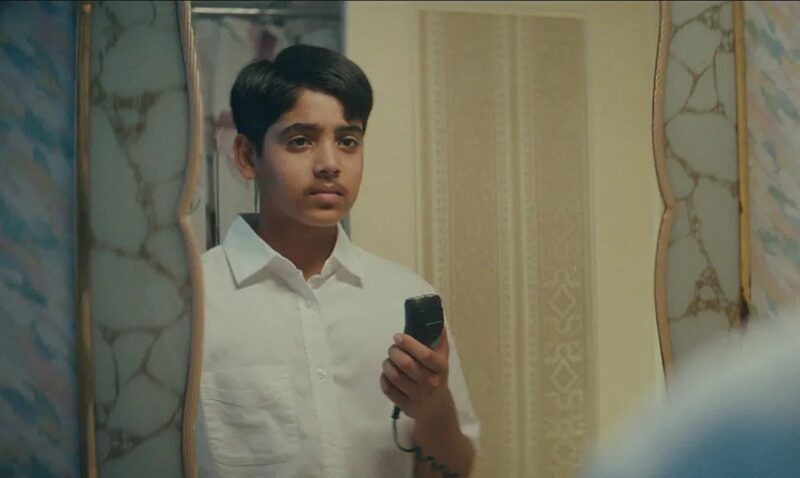
Mustache (Khan, 2023)
Mustache won the Audience Award for best narrative at the 2023 SXSW Film Festival and then…sat, awaiting distribution for a theatrical relase that never came. Whether the film’s depiction of a Pakastani-American family living in Northern California scared off potential distributors or the film languished for some other reason, it was great to hear that Quiver picked up the film in the Summer of 2026 to at least get it on some streaming outlets.
I described Mustache to a friend, only half jokingly, as a male, Muslim version of Are You There God? It’s Me, Margaret. Aside from having adolescent protagonists dealing with the awkwardness of puberty, both films (or the Judy Blume book the former is based on) feature characters trying to udnerstand the role that religious traditions, important to their family, play in their own lives. To the extent that Mustache emulates the tone of Blume’s narrative it feels like a bit of a throw back. Coming of age stories seem darker for Millenials than they were for Gen-X, when kids were a little scared of their parents but rarely had to face fears in suburbia that lived up to their worst nightmares.
There is teasing here, particularly over Ilyas’ titular facial hair, and that teasing pushes a few different buttons given the lack of understanding in the public school setting about the particular flavor of familial pressures the Muslim kids endure. There is awkward emabarassment over a nascent interest in the oppositive sex, in this case an Asian girl named Liz who is friendly enough to Ilyas to allow him to ponder the whether something mroe than friendship is even possible. As an educator, I was also happy to see the depiction of teachers in the public school who were neither dead, bitter, nor tyrants. Alicia Silverstone gives a full-circle guest starring gig as Miss Martin, the school’s drama teacher who gently draws the boy into an area of interest while allowing him to feel safe and draw his own boundaries.
The plot of the story, such as it is, centers around Ilyas’ trying to pretend that public school is “corrupting” him so that his parents will take him out of it and return him to an environment that he doesn’t really like any better but feels safer in because of its familiarity. Khan also wrote the screenplay, which is generous in its treatment of the supporting cast in a way we don’t often see in comedy. Nearly every character who would be a one-dimensional antagonist in a different movie of this sort is given the opportunity to do real damage to Ilysas’s psyche but find their way to expressing decency and humanity instead. As a result, the antagonist becomes childhood anxiety itself rather than a particular villain who is made the cause of it.

