Coyote vs. Acme (Green, 2026)
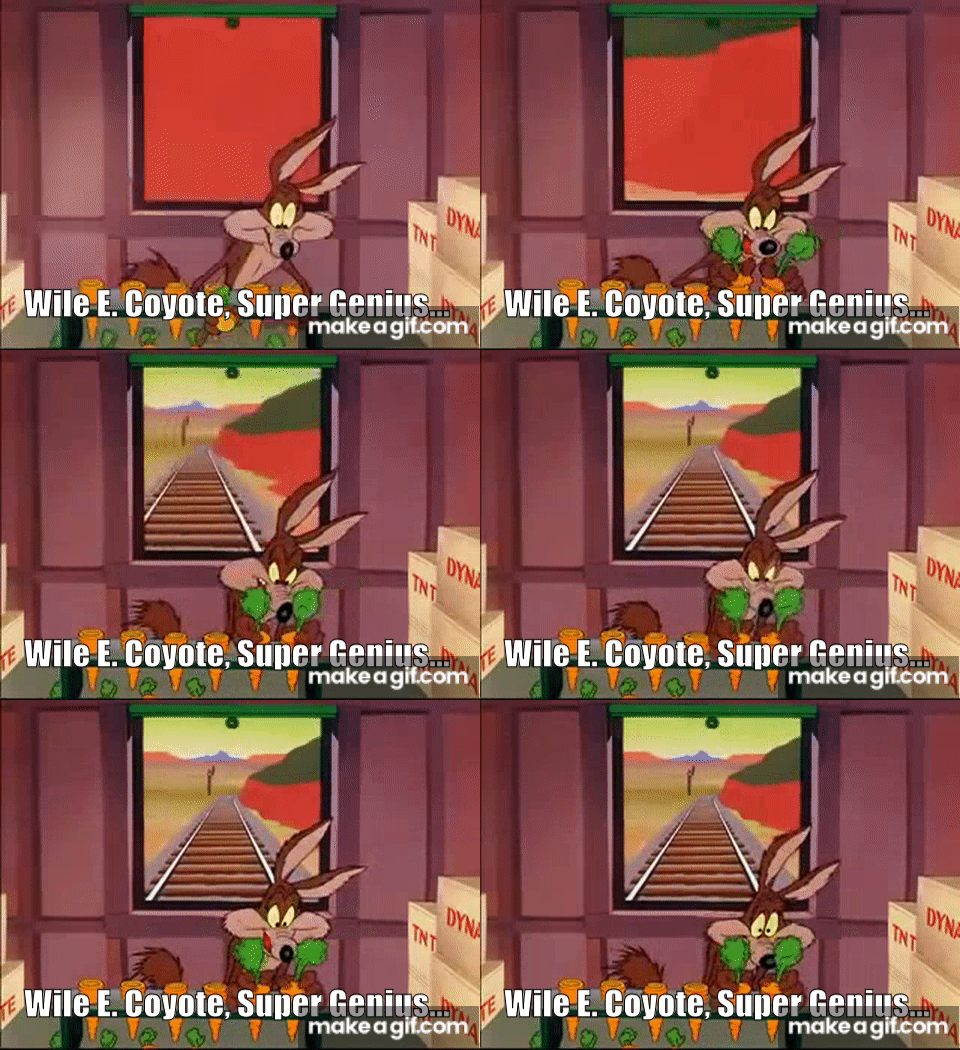
When I was an undergraduate student in the 1980s, several of my friends gave me the nickname “Supergenius” due to some mysterious resemblance they saw between me and Wile E. Coyote.
I didn’t mind. In fact, the oft put upon masstermind of the Looney Tunes world has always been a bit of an inspiration to me. I once came back from a vacation cruise with a henna tattoo of my hero on my right bicep.
All that to say, the chances of my not enjoying this movie were only slightly higher than the chances the coyote would catch the roadrunner. Maybe not zero — I had, after all, approached Zoolander 2 and the stage production of Wicked with the same joyful anticipation only to be met with crushing disappointment — but somewhere less than one in a hundred.
It should home as no surprise then that I enjoyed the film on a purely nostalgic level. What did surprise me was how hard it landed on an emotional level. By making Acme the villain of the piece and Wile just another fed-up everyman (everycoyote?), the film feels topical without being purely allegorical. The world-building is not that of 1984 or Blade Runner, but it doesn’t have to be. It presents a corporatist oligarchy in a way even a child could understand but with enough bite to make cynical adults, bombarded by the shock doctrine, long for the days where exposing evil plans was enough to spark outrage against those perpetrating them. Perhaps because the world the Tunes share with John Cena and Will Forte feels so familiar, the blending of live actors and cartoon characters works far better than it did in Space Jam or Tom & Jerry.
Call me crazy, but there may even be something soul-soothing in the courtroom testimony of the Road Runner, who affirms with two beeps that Coyote is a friend and lets him know that he misses him, asking if he will ever come back. As our own world descends deeper and deeper into the abyss of polarized hatred stoked by propaganda, being reminded that even children used to be able to tell the difference between genuine hate and play-acting was certainly fun.
Like its most obvious predecessor, Who Framed Roger Rabbit?, this film depends on human actors willing to take the risk of potentially looking stupid by playing it straight. Will Forte as Coyote’s spineless lawyer and John Cena as the villainous adversary are both up to the challenge. Special shout out as well to Lana Condor, Aimee McGuire, and Kristin K. Berg for stellar, professional supporting work. So much of comedy depends on timing and delivery, so human talent must have been exceptionally patient and generous in filming their scenes, and never did I get the feeling so common in a Star Wars or MCU movie that an actor was tiredly delivering lines to a green screen.
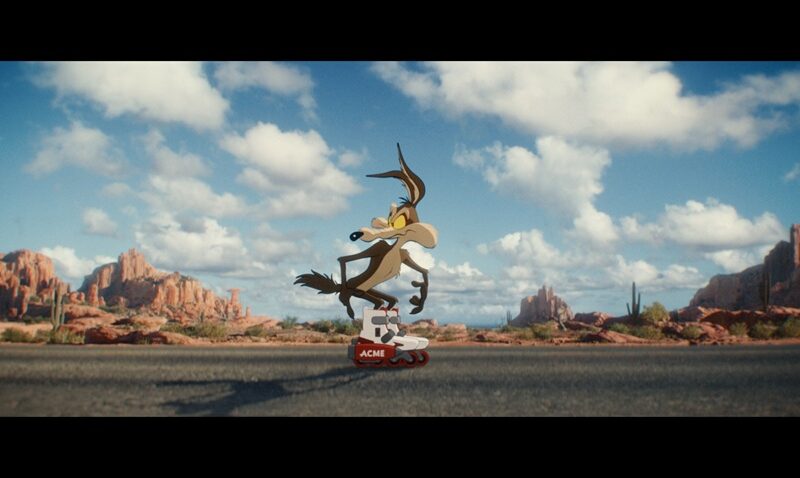
By now I expect everyone knows that this film was locked in a vault as a tax write off. There is, then, a metafictive quality to the story of soulless corporations gutting creative enterprise. Ketchup Entertainment is estimated to have spent $50 million to acquire the distribution rights for Coyote vs. Acme from Warner Brothers, and I guess that’s another reason I badly wanted the film to succeed. I don’t have a stake in either company, but I would rather see companies making money for giving us films to watch than for witholding them out of fear they will not make enough. Is it a coincidence that Acme’s plot in the film is symbolically called “Project Sisyphus”? Is making movies (or cartoons) just an endless, pointless labor with no respite or reward? We appear to live in a world where the fact that the film is, you know, good, is beside the point . . . and that feels as unnatural as a coyote on roller skates.