
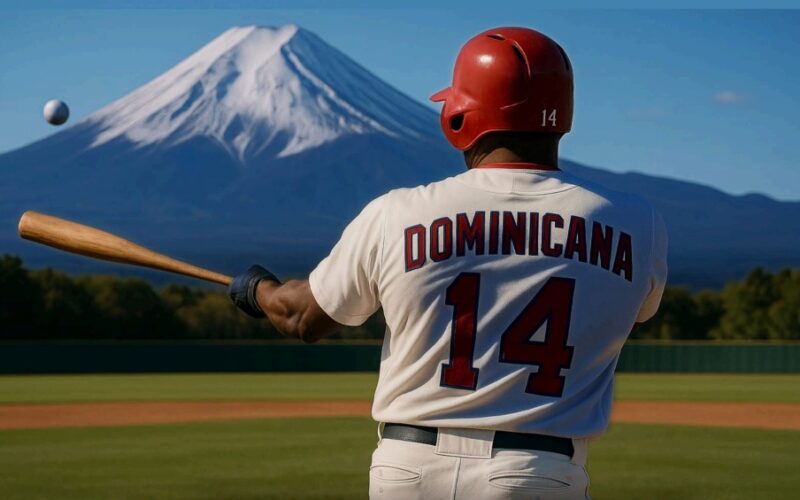
Boru (Sosa, 2026)
Boru is a documentary about the little known yet fascinating historical connections between the Dominican Republic and Japan. The filmcraft is fine, and it is packed with short but thoughtful interviews from a variety of perspectives. There are Japanese chefs who describe learning how to cook rice the way Dominican baseball players like it. There are transplanted Dominicans working at baseball academies describing the differences between Japanese and Dominican approaches to the sport. (The Japanese play small ball; the Dominicans hit for power.) There is a Dominican historian who discusses how former dictator Rafael Trujillo promoted Japanese immigration from Hiroshima and Nagasaki after World War II in order to make settlements near the border harder for poetntial Haitian immigrants to cross.
There is, in short, a lot. And while I am generally a proponent of the maxim that no good film is too long, I recognize that feeling a film dragging can sometimes signal structural issues with the film and not just impatience on the part of the viewer.
The first twenty minutes of Boru is easy to follow and engaging. It focuses on the experience of Dominican baseball players attending Japanese academies or playing for Japanese teams. The film provides insights from current and former players about how they experienced culture shock and how they work to reduce it in those coming to Japan. The work of social integration is not merely practiced by the visitors, it is promoted by the hosts. Attention is given to practical concerns, such as learning the language, and to understanding the culture. At the heart of this part is the implied assumption that the successful integration of other cultures is a win-win, something beneficial for both the host nation and those seeking a better life in it.
Then, somewhat abruptly, the film switches focus to the lives of Japanese immigrants and their descendants living in the Dominican Republic. Their stories are as interesting, at times maybe more interesting, than those of the baseball players that opened the movie. But because of the branding — there is a baseball bat literally on the title logo — the connection between the two parts is not immediately clear. Then, as one adjusts again, the film shifts again, from the historical past back to the present, albeit still with a greater focus on those living in the Dominican Republic. I didn’t put a stop watch to all scenes, but overall it felt closer to one-third stuff in Japan and two-thirds stuff in the Dominican Republic.
There is nothing wrong with the material in the back-half, but at about the fifty-minute mark, I gave up on the hope that the film would offer a thesis that would make the structure meaningful. By beginning in the ninth inning of a baseball game, the documentary adopts an en medias res structure that gets it off to a fast start, but does so at the price of overall coherence. From an editing standpoint, nearly all of the interview segments are of the same length, making one blend into another Juan Zapata stands out a little because he is saying and doing something different — giving historical analysis rather than reflecting on personal experience. Beyond his participation, however, the participants blur into a montage of similar stories with similar points. Director Ronny A. Sosa does a strong job at gathering diverse participants, but he is less successful at highlighting key points. When his historian claims that colorism — prejudice against those with darker skin tones — was the historical reason for Trujillo prefering Japanese immigration to Haitian immigration, the charge lingers in the air for a second and then…the film moves on to another topic.
I wonder with the streaming options available if Boru might have worked better as a series of thirty-minute episodes rather than a feature documentary. An episodic structure might have allowed viewers to digest some of the material before moving on to the next interview. The documentary structure along with the promotional material risks making the material feel like a bait-and-switch. Alternately, a stronger introduction, perhaps with a central narrator, might have given the viewer a lens through which the material might be more focused. We do get occasional flash cards with definition of key terms or translations, but these are only successful in announcing the subject matter, not in smoothing the transition from one interview to the next. The documentary contains some good, insightful material that I was glad to know, but I feel like it made me sift through too much to get to it and would have benefitted from a tighter, better, edit.


Spot on! I also did a CriticBridge review of this film and wanted to see if others had similar thoughts or if I was being too critical. Nice to see we noticed a lot of the same things. And the callout on brushing right over the heavier topics like colorism — sharp observation. Great review!