
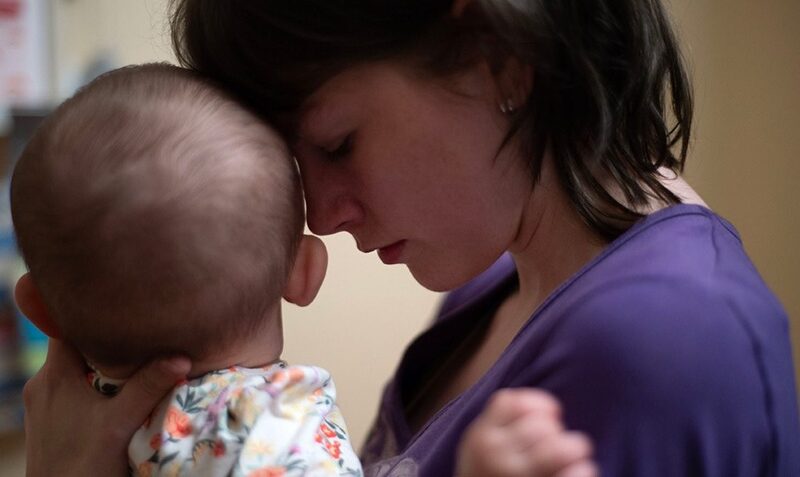
Young Mothers (Dardenne & Dardenne, 2026)
When reviewing a new film by Jean-Pierre and Luc Dardenne, the only pertinent question is whether the frame of reference for judgment will be their other films or something broader. I have screened eleven films written and directed by the Belgian pair, ranging from La Promesse in 1996 to this year’s Jeunes mères (Young Mothers). I am not sure which I consider to be the Dardennes’ eleventh best film, but whichever one was the least successful was still better than ninety percent of the movies I saw that year.
My favorite from their filmography is Two Days, One Night, a narrative that is especially well suited to illustrate one of their favorite themes — the profound impact of face-to-face communication between human beings. Aside from many of the qualities that make a Dardenne film such an enriching experience, that film managed, somewhat miraculously, to concentrate broad social issues within a single narrative without the outcome claiming to be representative of what happens to all or most who face similar circumstances. This ability to reveal ambiguity and complexity within a single story is one of the reasons their films never feel like lessons or polemics. I often have empathy not just with the victim or protagonist (usually, but not always the same character) but often with those who act as antagonists. I may not agree with what they say or do, but I understand why they did it.
I provide this context because the most striking change in Young Mothers from the aueters’ previous work is not thematic or stylistic but structural. There are five stories instead of one. Perla, Ariane, Jessica, Julie, and Naïma each have stories to tell. If each story is interesting in its own right, it is hardly a surprise that no one storyline approaches the richness or complexity of the experiences of Rosetta or Sondra or Lorna or Jenny. It is telling that I do not even feel as if I have to remind readers which films those characters are from. Two of them are in movies titled after their characters, a telling indicator that they are narratives about characters and not character types. The title here hints, maybe, that the directors are more interested in the situation the characters are in than in any one character who is in that situation. It is a legitimate approach, but, for me, it tends to make the pieces of the larger whole look and feel a bit more generic.
One young mother is a recovering addict trying to qualify for an apartment with a supportive partner. Another makes decisions based not on what is best for her or her child but on what she thinks will get her disinterested lover to commit to the relationship. Another explores the possibility of giving her baby to foster parents despite the manipulation of her own mother who wants her to keep the child or give it to her. In yet another storyline, a young mother tracks down her own biological mother, trying to deal with her own deep-seeded depression and feelings of rejection before deciding how not to visit the perceived sins of one generation on the next.
That is a lot of ground to cover, even for writers with the Dardennes’ formidable gifts of precision and concision. Their best writing quality, at least for me, is how infrequently their writing feels or sounds like characters are speaking in expository dialogue. (By comparison, I watched this film the day after viewing Spike Lee’s Highest 2 Lowest, a film I thought was constantly telling me rather than showing me by having the characters verbalize the meaning of their every action.) That writing talent is on display here, but showing rather than telling takes time. For a film that is 105 minutes long, that means an average of twenty-one minutes for each mother’s story — less character development than one might get in a serial television episode.
For that amount of time to encapsulate complete story arcs, there needs to be some selectivity in where along an arc a story is joined so that it can conclude at a pivotal moment. That moment may not complete the arc — how could it when the young mothers are at the beginning of a long story? — but it usually signals a transition, revelation, or change. That’s the most artificial part of the film’s structure. In a young mothers’ shelter, it is quite possible that several people would have such key moments in close proximity because the very nature of the social situation demands it. Those mothers who pass on to other stages of their lives will be replaced by other young mothers, so key events are always happening. But since this is the cohort we are invested in, it feels a little strange that each one’s mini-narrative comes to a head at the same time.
I hasten to add that those structural problems do not keep the film from succeeding overall. Any Dardenne film is a cause for rejoicing, and there are moments in this one that got me to see these young women as people in a difficult situation rather than merely as stock figures. We are in desperate need of art today that elicits empathy rather than condescension and contempt. Every time Jean-Pierre and Luc settle their gaze on the type of character that I would look past if I saw in real life, I am rewarded and enriched by how their capacity to see others enlarges my own. Young Mothers is no exception.

