
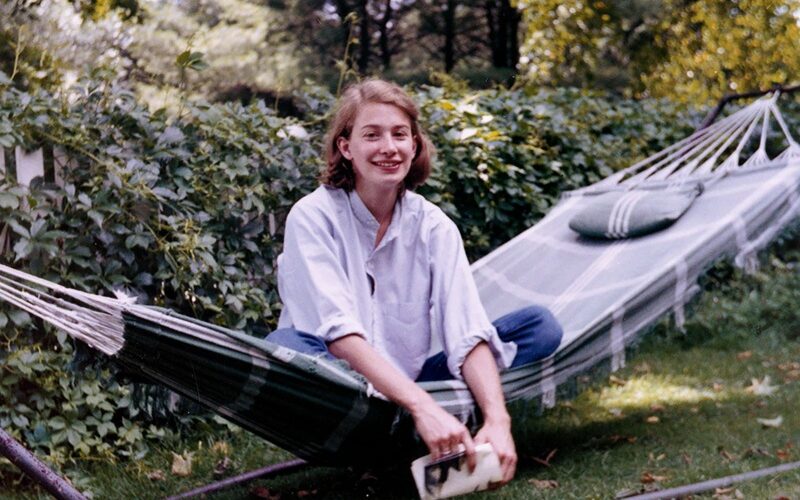
Mary Oliver: Saved by the Beauty of the World (Waters, 2026)
There is a moment in the middle section of Mary Oliver: Saved by the Beauty of the World where one of the many, many, many, fans of Oliver who praise her and her poetry so very, very, very much alludes to a generalized complaint about the poet from an unttributed source. The critic claimed that if you have read one Mary Oliver poem, you have read them all. I don’t agree with the criticism, but the way it was brushed aside in the documentary, raised only to be dismissed rather than answered, helped clarify why the film itself wasn’t landing for me. It was a hagiography rather than a biography.
To call something a hagiography typically means one of two things: a profile presents the subject as without fault or blemish, and/or it does so in a tone of reverence. People who don’t share the exalted view of Oliver as a person or poet are not only wrong, they are blind, ignorant, unenlightened.
I should clarify, I guess, that I like Oliver’s poetry. If I didn’t, I would not have watched the documentary. It doesn’t transform me into a transparent eyeball or motivate me to sound my own barbaric yawp, but I am grateful for the reminder that everyone’s life, including my own, is wild and precious. What I am less a fan of is … fandom. Other people’s enthusiasm for a thing, be it poetry, music, a sports team, a movie, a book, a friend, rarely deepens or enhances one’s own. Oh, I’ve been to enough rock concerts and church services to acknowledge that the enthusiasm of a crowd can be infectious and can make it easier to participate in whatever celebration one is witnessing regardless of one’s own relationship to the thing(s) being celebrated.
Oliver was apparently a lesbian (or queer, if you prefer), a personal detail that I did not know and which at least one of the interviewees asserts often provokes suprise in her fans when they find out. Whether or how her sexuality influenced her life or poetry is less clear. Jon Waters, who worked at a book store run by Oliver’s partner, claims that Oliver in her partner were very much “out” but not public advocates for gay rights. Ada Limón goes so far as to reject the concept of “civic duty” (self-reflexively noting the irony of such a sentiment coming from a poet laureate). She, like most all the interviees, comes across as ready and willing to go to bat for Oliver against any potential personal or professional criticism.
Like everyone, I suppose, Oliver apparently liked some of the consequences of being elevated to celebrity status, especially the financial rewards, while disliking others. Like all thought work, writing can appear to be an easy discipline, especially if one doesn’t understand the time spent in contemplation and observation. In one scene, a woman crying at a public reading begs Oliver to read the poem “The Journey.” The poet graciously complies, though we do not get the reading itself or much reflection on whether such an interaction was normal or exceptional. Her readers adored her and she was, apparently, gracious with them.
The closest the documentary gets to an insight comes in a claim (unsubstantiated, but it sounds reasonable) that Oliver is a favorite of people who don’t otherwise like or read poetry because her words spark emotional recognition among readers who have been ripped apart by life, who need and find comfort. Whether that assessment is accurate or not, I do not think it is the unreserved compliment it is offered as. The quality of accessiblity — being comprehensible and meaningful to the widest common denominator of people — is assuredly a reasonable metric by which to evaluate art. Is it the only one? The best one? Like so much of the documentary, the claims here are not so much false as casual and superficial.
I don’t dislike Mary Oliver nor any of the people who offered testimonials to her greatness. I just found those testimonials so effusive, so relentless, so of a piece, that after the first thirty minute I found myself pushing back against the tide of parise lest I drown in it.

