
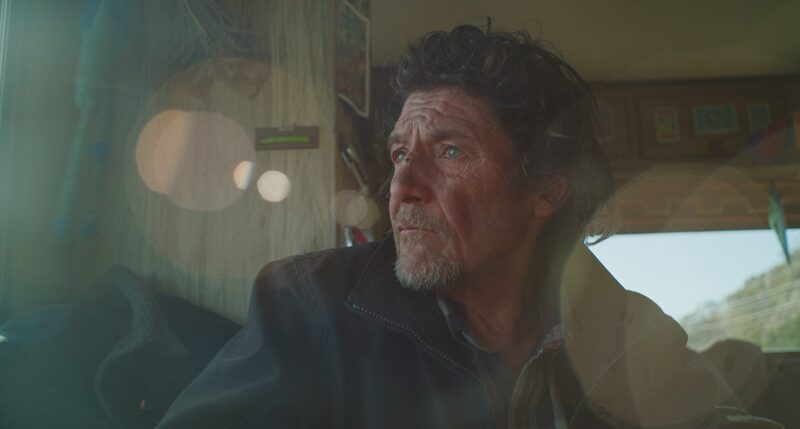
Màquina (Pujol, 2026)
The American sports pundit Jim Rome once brutally riffed that the only thing less interesting than the details of someone else’s golf round are the details of someone else’s poker hand. While that take might seem on the surface counter-intuitive or even rude coming from someone who made his livelihood interviewing sports figures, there was truth in it. That truth stems from the perhaps hard to accept realization that just because others might invest a great deal of time and interest in someone else’s golf round, that doesn’t mean the thing itself is inherently interesting. And more often than not, the thing that makes the details interesting when performed or detailed by someone else are missing from our own experiences of it.
I preface that to say, I hope respectfully, that the details of someone else’s addiciton and recovery are far less interesting, in my experience, to the rest of the world than they are to the addict himself (or herself). There are, of course, storytellers who are so good at their craft that they can make otherwise undramatic or unlikable people engaging. Lauren Greenfield does as much in The Queen of Versailles. There are also those instances where some iteration of a common experience is so exceptional that it warrants interest because of how it happened or who it happened to. In the sports analogy, the reason the details of Tiger Woods’s golf round are so much more dramatic than the details of my own have nothing to do with the intrinsic interest of the sport itself. Have their been interesting, dramatic, or engaging films about addicts? Yes. That doesn’t mean addicts as a general rule are particularly insightful about their addiction or the ways they present it to the world.
The synopsis for Màquina in the press notes begins, “When a father consusmed by acholism agrees to join his son on a journey through psychadelic-assisted addiction treatment in Colorado…” The documentary (and the rest of the press notes) is a bit more forthcoming that Pujol is seeking treatment for his own addiction and is joined by his father. But the way the opening of the synopsis suggests that the film is more about the father’s addiction (and his son’s response to it) feels more than just coincidental. Pujol calls the film a “personal reckoning” that is “rooted in my own experience” of a “father-son relationship shaped by generational trauma and substance abuse.” Only in the Q&A does he acknowledge his own addictions. When he talks about his own addiction struggles, they are always welded into a larger narrative of “family trauma” or contextualized by mitigating circumstances: he was “shooting a TV show that was eating away at my soul.”
I am not Pujol’s sponsor. Heck, I’ve never been to an AA or NA meeting. But I have read enough Al-Anon literature and been around enough addicts to know that one’s refusal to accept personal responsibility for one’s own addiciton should be a huge red flag when interacting with those in recovery. The addict rarely if ever comes out and directly blames another for his addiciton, but the lifelong habit, crusted over into a survival skill, of habitually deflecting blame should be familiar to those who have had to spend significant times with an addict, even one in the early, imperfect stages of recovery. The pattern of blaming others does not mean that the desire for recovery is insincere, but an unwillingness to confront it or call it out has, I am sure, slowed or derailed many a recovery journey.
If this were only Pujol’s story, it might be easier to marshal sympathy for the horrible nature of these experiences regardless of how he presents them. But the documentary struggles at precisely this point. Once Pujol makes the decision to make it as much about his father as himself, he turns the film, subtly but tellingly, into one that appears to be saying, “this is the reason for my addiction” rather than “this is my response to it” or “this is my attempt to overcome it.” He struggles to show his dad the same sort of empathy that the film calls on us to show him. In one exchange, son tells father, “You have a story for everything [….] You have an excuse for everything” and, most tellingly, “You want to get angry at others for pointing that out.” In the same section, but in a different exchange, the son tells his father, “It’s time to jump off the f—ing cliff or die.” It is a raw and real reaction, and it would have packed more weight if it had not carried the rider that is attached to so much of the film — how the father’s recovery efforts pale in comparison to those of his lecturing son. “I’ve suffered,” he wants his dad (and us) to know. Consequently, “I can’t be concerned with whether you drink or not.”
And so the cycle continues. There will be, no doubt should be, those who might read this and chastise me for asking the same question of Pujol that he so angrily flings at his father: why should I care about your suffering from an addiction rather than the suffering your addiction has caused others? It is not an unanswerable question, but it is one that the film is curiously uninterested in seriously engaging. Perhaps it is too much to expect of someone in the early stages of recovery to be able to focus on anything other than his sobriety or number of days clean. I found myself, more than once, wishing Pujol had made a documentary about how and why the television series he mentions in the press notes was “eating [a]way at my soul” and how that experience related to his bottoming out and deciding to seek treatment. IMDB says he filmed seven episodes of One on One with Kirk Cameron, and I could only imagine how interacting daily with that particular brand of Christianity might enhance rather than ameliorate the kind of existential despair that someone in a tailspin would be exepriencing.
In the end, however, we can only rate the film we have been given. I found Màquina tiresome, and while a part of me wishes I were more universally tolerant or patient with addicts (hell, with everyone), I found it impossible to give to Pujol what he couldn’t give to his father. I hope both their recoveries take. Who knows, maybe some day with time and maturity and reflection one or both of them will have something more engaging to say about the process than that it was painful and that the rest of the world is to blame for it.

