
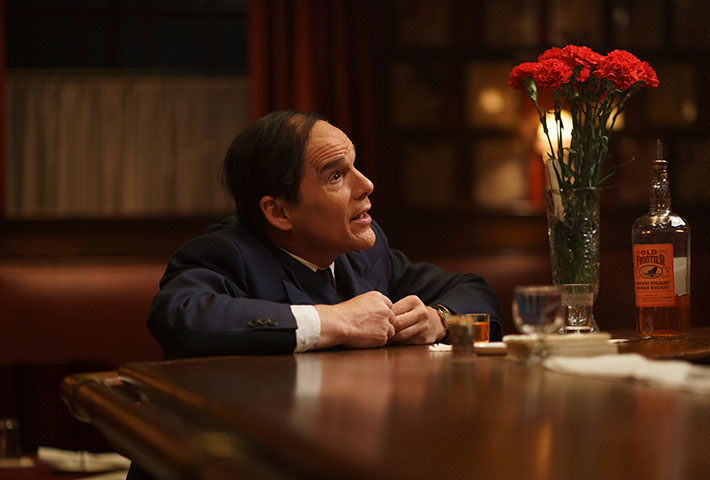
Blue Moon (Linklater, 2025)
Blue Moon is a film so dour, so bitter, so devoid of joy or hope or spirit, that even those who praise it have trouble articulating why they are doing so.
If you hop on over to the critics’ reviews on Rotten Tomatoes, where the film is currently brandishing an inexplicable 91% “Fresh” rating, you will notice an odd array of contradictory interpretations of the film. Gary M. Kramer (Gay City News) says that star Ethan Hawke commits to his character’s “doomed hopefulness.” Right below his review, Alison Willmore (New York Magazine) praises the same performance for letting the “despair seep out.” Johnny Oleksinski (New York Post) calls the film “witty” and “hilarious,” while Preston Barta (Denton Record-Chronicle) says it is “heartbreaking.” Mark Dujsik (Mark Reviews Movies) goes even farther, saying it is “filled with anguish.”
I know, I know, cherry-picking pull quotes from a review aggregator is the lowest form of argument . . . except, I am not really arguing with anyone, just illustrating that the evidence being offered is tough to argue with since then film is being described in contrasting ways. “Hopefulness” and “despair” are actual words, with actual meanings, and while I share admiration for Ethan Hawke as a performer, it is hard for me to say this is an effective portrayal when there is so much disagreement about what is being portrayed.
The film opens with Lorenz Hart (Hawke) dying in a rain storm, literally and figuratively in the gutter, before it flashes back seven months to an after-party for Richard Rodgers (Andrew Scott) and Oscar Hammerstein II (Simon Delaney) on the opening night of Oklahoma! Other than the theatrical convenience of a single location, it is not clear to me why the film starts and ends here, since Hart is shown as already an alcoholic, already alienated from his past success and merely tolerated by this former friends and fans. Within ten minutes, we understand exactly why Rodgers moved on. Scott’s performance is actually the stand-out for me, as he amazingly makes Rodgers patient without being a saint, appreciative of the past without being beholden to it.
A movie about Rodgers might have been less static, but we can only review the movie we got, not the one we wished for while watching it. Why we persist in believing that alcohol makes people more dramatically interesting is a mystery to me. There have been good films about alcoholics, to be sure, but they are usually dramatic to the extent they say or show something about what caused the pain the drinker is trying to numb.
The character Hart most reminds me of is Shelley Levene from Glengarry Glen Ross. Both characters try to preserve their diminishing sense of self-worth by living in and talking about their past, professional successes. But the gulf between the parts they play and the reality the live is so great, that the effort to keep talking is exhausting. And that effort it takes to not respond dismissively or angrily to it, exhausts us. Or it is exhausted me, anyway. Unlike Rodgers, we can’t walk away, either. I mean, I guess we can, technically, walk out of the theater, but that is ending the relationship rather than the monologue. If you have ever been cornered at a social event by someone relentlessly unwilling to let you disengage, then you have experienced something akin to what it is like to watch this movie.
Ethan Hawke, nails Hart, I guess. But he nails a mean-spirited, drunken, self-absorbed bore. Whether Hart was like that in real life, I know not. Some reviews take umbrage at the movie’s portrayal claiming it misrepresents him. I had a hard enough time caring one way or the other.

