
You Had To Be There
There is nothing that quite matches the euphoric effect of creative synergy. Like-minded individuals combining their talents and energies to bring alive a work of art is one of the closest things to magic we have in the modern world. Nick Davis’s You Had To Be There focuses on one such moment of transformative artistry–the 1972 Toronto production of Godspell. Featuring a stacked cast of future comedic legends such as Martin Short, Eugene Levy, Gilda Radner, and Andrea Martin, this Canadian run of Godspell introduced the counterculture version of Christ’s passion to ‘stuffy’ Toronto and became an overnight sensation. You Had To Be There is the first time an account of this production has been created with the participation of all living cast members and made available to a broad audience.
For the uninitiated, Godspell is a musical created by composer Stephen Schwartz (Wicked, Prince of Egypt) that brings to life the Gospel of Matthew by portraying Jesus and the band of disciples as hippie clowns. If the last sentence made you raise your eyebrows or cringe slightly, please stay with me. Godspell is a compelling piece of art for the way it allows audiences to engage with the Passion of Christ in a way that highlights both the humor and countercultural strangeness of the Gospel message. It gets you past the familiarity/safety of rote Sunday School accounts and brings the focus back to the Gospel’s seeming foolishness to those who are of this world. As a result, comedians rather than classically trained actors are uniquely suited for the production, making the 1972 Toronto company of Godspell an example of perfect casting.
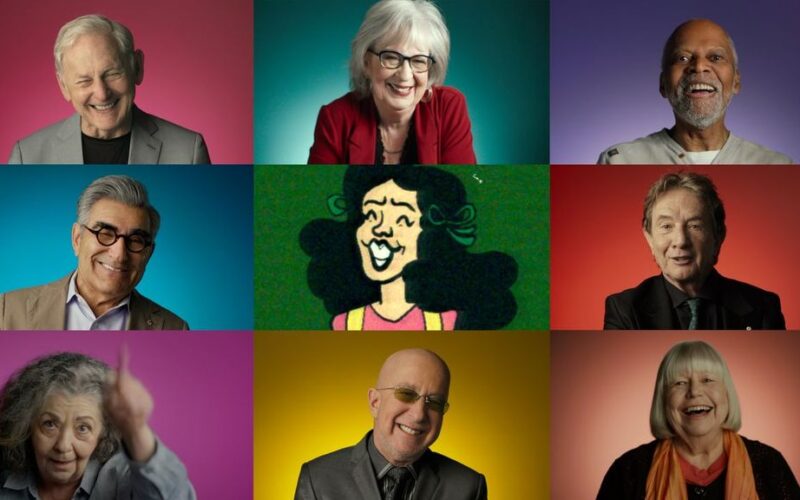
You Had To Be There is a remarkable documentary for the way in which Davis recreates the jubilant energy of the production using only oral testimony. Since no formal recording of the show exists, Davis intercuts traditional interview footage with winsome animated segments of the recounted stories. Rather than having the alienating effect of a reminiscence circle for non-participants, the viewer feels like they are part of the action. Of course, it helps that the individuals sharing their memories of the production are charismatic performers like Short, Levy, and Martin. Each is a masterful storyteller, knowing how to alternate from dry one-liners to boisterous imitations to more soulful reflections.
One of the most moving elements of the documentary is the way viewers can see the degree to which the show had a profound impact on its individual performers. Despite over fifty years elapsing since the show’s opening, the cast speaks of the experience as if it were yesterday. More than a big break in show business, it served as a transfigurative creative experience for most of the players – the mountain top moment upon which their future avenues of innovative artistry were founded. The actors speak of their time in Godspell with the reverence and deep affection reserved for something precious. This illustrates how powerful shared creative experiences can be when you are young and finally discover the right people and project.
Lest the film seem like a largely self-congratulatory effort, You Had To Be There is leavened by a healthy dose of Canadian humility (read self-deprecation). As spectators of American culture, Martin Short notes that many Canadian performers grew up with an inferiority complex due to being the “less attractive” little sister of Great Britain and the USA in the 1970s. Canadians in this period struggled to develop their own unique cultural products and the audience base to support them. The documentary is frank about how the Toronto players felt like underdogs compared to their international counterparts. However, it is this ‘outsider’ status that spurred the level of creativity and comedic risk-taking that ultimately set the Toronto production apart. While the talents of the Toronto cast are applauded, both Levy and Martin are quick to acknowledge the absurdity of the circumstances that converged to make them successful.
Davis’s film serves as a welcomereminder of the long-term cultural impact that seemingly niche shows like this can have. The relationships built in the 1972 Toronto production of Godspell led to new comedic heights in television (SNL, SCTV) and film. Good art begets good art.In an age awash with AI slop and derivative storytelling, You Had To Be There reminds viewers of the pure joy of creative risk-taking within community.

