
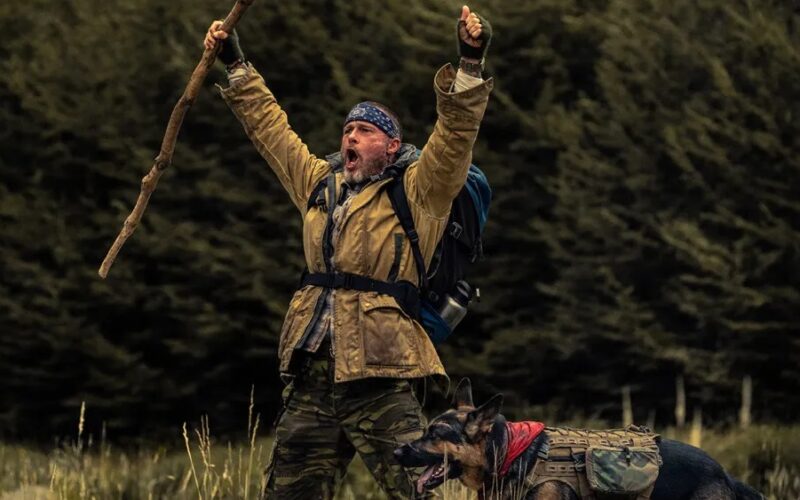
Heart of the Beast (Ayer, 2026)
I have spent nearly twenty years trying to convince myself and others that movie reviews are not simply records of personal opinions or taste. And I believe that. At the same time, I am acutely aware that there is a non-zero percentage of films about which I can agree with any number of formal critiques while ultimately shrugging and saying, “Yes, but I liked it.”
There are, occasionally, films where I am genuinely curious to see whether or not my peers respond in the same way I do. Heart of the Beast was not one of them. It is conventional enough in its subject and telling, that I thought (accurately, it turns out) that I could anticipate before glancing at Rotten Tomatoes what both the praises and criticisms would be. Naysayers would point out that the story was predictible, lacking in dramatic tension since at least part of the conclusion was known at the beginning, and similar to most other survival films in tone and structure. Heck, on Letterboxd, I called it The Martian with a dog and Alaska subbing in for Mars.
But those lobbying in favor of the movie point out that Brad Pitt is credible in his role as a retired military combat veteran, that the bond between man and dog is genuinely pathos-triggering, that the cinematography highlights the Alaskan wilderness in such a way to reinforce one of the film’s main themes about the coexistence of beauty and violence, and that the score helps drive the mood in ways that convey the reality of PTSD without being too literal or obvious.
I am on the plus side, and I am not even a dog person. I did think the movie was over-explained a little bit throughout and a lot at the end. This criticism could be made of most any commercial, studio film these days, since shortened attention spans of audiences appear to have made an entire generation of writers afraid that anything short of repeating onself thrice might be too subtle for Gen Distracted. I go the movies so that I will have an excuse to turn off my phone, so maybe it was the fact that I was in the theater that made me notice certain beats being repeated. It may also be why I felt the film lagged a little in the middle. Even before the catalyzing incident, we all know more or less where this is going. While the story proper is happening, I also wondered if the script was overwritten a tad or whether James Belmont (Pitt) was just the unluckiest guy to ever get stuck in the Alaskan wilderness.
To compensate for the necessarily repetitive nature of the script, director David Ayer keeps the pace brisk. The editing here does so much heavy lifting for the film. For the aciton to be credible we have to see enough of Belmont building a fire to know that he can do it. On the other end of a pacing scale lie films like Bresson’s A Man Escaped where every detail about the escape must not only be explained but shown in painstaking detail. I don’t mean that as a criticism. Bresson’s film (which I adore) is about painstaking details. Ayers’ film is about the causes of the link between man and dog and the motivations for the experience; it’s not about the mechanics of the experience.
Perhaps the biggest knock I have with the editing is that I thought the combat flashbacks were both repetitive and unnecessary. In an early scene, Belmont explains why Loki (the dog) has an amputated paw and titanium teeth. He also states matter-of-factly how he responded to the indicent causing Loki’s injuries. That explanation was sufficient for me to understand the brutality of the combat they endured and bond that it created between them. It also gave the film an excuse to drop in the always great J. K. Simmons for a cameo. Once that scene was over, the flashbacks felt like they were explaining things I already knew.
Yes, yes, yes, but I liked it anyway. In an age of overbloated epics, including a nearly three hour version of The Odyssey, it actually felt pretty great to go to a seven p.m. show and still get home and in bed by ten. I subscribe to the axiom that a film that you are enjoying is never too long or too short. Part of the pleasure of Heart of the Beast is in how efficient, simple, and focused it is.
Sort of like the love of a dog.

