
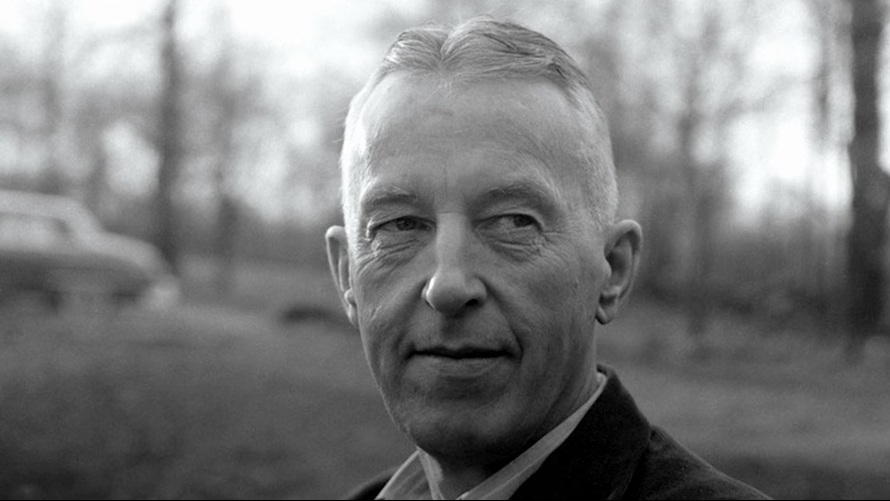
I never knew his last name was Wilson.
Such are the vagaries of modern history that a man whose life has had a greater impact on more lives than any celebrity I can think of remains anonymously in plain sight. William Wilson was the founder of Alcoholics Anonymous, This documentary seeks to explore his spiritual awakening, the role it had in his sobriety, and the necessity of understanding it in any particular way to effectively navigate AA’s twelve steps.
God is a major part of AA’s steps, and one need never have attended a meeting or interacted with a member to know that this can be a source of resistance to some addicts and a source of consternation to others hardened in their belief that religion can only be a source of deception and cruelty, never of deliverance. Kenneth L. Pargament reports in his book Spiritually Integrated Psychotherapy that while 90% of the United States population “reports belief in a personal God” that belief is shared by only 24% of “clinical and counseling psychologists” (Chapter 1). For those who do not believe in God, a patient’s own spirituality is too often viewed as, at best, an impediment to facing reality, at worse, a neurosis materially contributing to behavioral issues.
The reasons why any profession or portion of the population might be anti-religious are too long to summarize here, but they are, I think, an important context for understanding what this documentary is about. “Conscious Contact” is a phrase taken from AA’s eleventh step, which has members affirm that they have “sought through prayer and meditation to improve our conscious contact with God as we understood Him, praying only for knowledge of His will for us and the power to carry that out.” The film is not a traditional biography of Wilson, but it does have him recite in archival footage his own conversion, which came at a point of despair and led him to cry out, “If there is a god…” that he begged for that higher power to make himself known.
Much is made in the documentary of the fact that Bill’s prayer came from a place of agnosticism. The word “if” means that Wilson was uncertain of the presence of any god. What he apparently most wanted was something with the power to change his behavior. It is also worth noting, as the documentary does, that it was common in the 1930s for alcoholism to be treated as a “disease” for which there was no known material cure.
While Wilson found connection to a higher power to be integral to his own sobriety, the articulation of his program’s twelve steps has undergone revision and tweaking…including by Wilson himself. This point is probably the most important one made by the film, which has generous participation from historians of AA and access to Wilson’s and the organization’s considerable archives. It is suggested that too many alcoholics treat “the big book” as a some sort of sacred scripture whose original language cannot or should not be changed. Biographical evidence, however, shows that Wilson himself tried to express his ineffable experiences with the tools of language available to him. How subsequent alcoholics have understood for themselves what was meant by a “higher power” appears to have been less a matter of orthodoxy to be enforced than the manifestation of a belief that no addict can survive or reform based on his or her own strength alone.
That can, of course, lead to deifying the process itself — with addicts insisting that going to meetings or sharing with another alcoholic/sponsor is, at heart, what makes the program work, regardless of what is being shared. While I find such revisions to be somewhat disingenuous, I will admit to being surprised that Wilson’s own spiritual development led him to become a practitioner of transcendental meditation, and that his latter life included acceptance and practice of forms of spirituality far different than the Christian orthodoxy from which the twelve steps emerged.
As an historical map of one man’s spiritual development and the history of the movement he founded, I found the film fascinating. As a debate or discussion from interested parties about what constitutes “close contact” … not so much. At least one of the interviewees is a self-professed Atheist, and while I am happy to know that AA is not exclusionary, I find arguments about how spirituality differs from religiosity to be tedious whether they come from Atheists or exvangelicals. Perhaps I am not the viewer best positioned to say this, but too much of the discussion feels self-aggrandizing or designed to promote the speaker’s brand of spirituality. I was expecting a deeper exploration of prayer (or conscious contact) as a discipline and why Wilson considered it an essential part of staying sober even after the alcoholic had completed the previous steps. If there had been more of that, I would have rated the film a gem. What we have here is worth an hour if only for the historical nuggets that might be harder to find if one waded through a feature length biography. By naming the film Bill W. Conscious Contact, director Kevin Hanlon and the producers suggest we are going to get Wilson’s understanding of that term. By focusing more on historians’ views of what he meant by that term and how they themselves understand it, they pivot away from the part of the story they are selling. In advertising, I believe that’s called a bait-and-switch.

