
Cookie Queens (Nahmias, 2025)
I don’t want to be the first guy to ruin Cookie Queens‘ perfect tomatometer score with an old-man diatribe. The documentary is a pleasant watch, and festivals with their fill of first-world guilt need a little positivity to keep my empathy reservoir from imploding.
But there is a push-pull going on in Cookie Queens between the crowd-pleasing, cheerleading documentary we got and the more probing, potentially critical take on the cookie experience that director Alysa Nahmias can’t quite bring herself to cut from the movie.
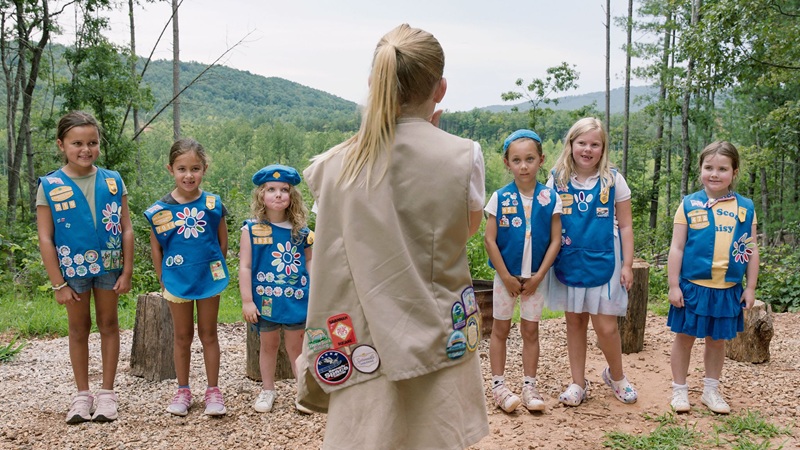
At its best, Cookie Queens tries to be a Girls State for toddlers, applauding the ambition and work ethic of the young women being showcased. They are a multicultural bunch, differing in age, goals, and advantages (or disadvantages) that impact their ability to reach their cookie selling goals far more than their entrepeneurial industriousness. One scout wants to earn money for a trip to Europe; another begins with dreams of going to summer camp while her parents worry that unsold inventory could cost them their home.
Yes, you read that right. The scouts are resellers forced to pay for the cookies up front, getting to keep about one dollar (or about 16%) of the proceeds from each sale. I have never been on Shark Tank, so I don’t know, maybe those are good margins, but it sounds more like Multi-Level Marketing than salesmanship to me. The scouts get varying levels of support from their families, with a consistent but underexamined theme being the impact of intrastructure necessary to make the big sales. One makes social media videos directing viewers to a web site (I think). Another pulls a wagon across a beach at night asking the occasional stroller if they want a cookie. Who do you think sells more?
Though it is no fault of Nahmias, reality-telivision casts a long, cynical shadow over these sorts of documentaries, making us question what not only what is real but also what is the relationship between the participants and the filmmakers. Would a family really mortgage their home if they weren’t being filmed? Would those documenting the experience simply have recorded it and gone on with their lives? When a cookie queen wonders on camera whether her drive to sell is her own or a product of her mother’s prodding, it is impossible to know whether she is projecting or whether some parental pushing has been left on the cutting room floor. Despite the seemingly high stakes the girls labor under, the enterprise itself goes largely unquestioned and unexamined. One of the more precocious participants does send a letter to corporate headquarters, and we are told in a postscript that she was made a member of a non-voting advisory board. Was the absence of any spokesperson from the corporate side a director’s decision? A decision of the Girls Scouts? What agreements, if any, were made to secure access?
As a relatively minor aside, at least twice in the film, particpants recite the Girl Scout Law, at least in part. I spent a surprising bit of the run time reflecting on the fact that this pledge, while similar to the Boy Scout pledge, calls on girls to be “friendly” and “helpful.” One trio of sisters articulate what I was thinking, but only in part. Is their younger sibling a better seller because she is “cute”? And following that, are we buying cookies or a presentation, contributing to the socialization that girls can and should be entrepeneurs or that female representatives are expected to be pretty, helpful, and friendly? I don’t think is anything wrong with being friendly, but I didn’t remember that being part of my cub scout pledge back in the day.
So what’s the take home here? That we should support girls and enterprises that teach and encourage them to push themselves to realize their potential? That organizations are seldom unequivocably good or irredeemably bad? That the parental lines between encouraging and pushing are impossibly fuzzy? That corporations are skilled at framing their exploitaiton of workers as something benign, even charitable?
Yes.
Truth is, I think, usually messier than what we see here. Still, when the youngest of the cookie queens makes a homemade batch of sugarless cookies to share with a customer who, like her, has diabetes, even the grinches, myself among them, could not help but smile.
Cookie Queens played at the 2026 Full Frame Documentary Film Festival.

