
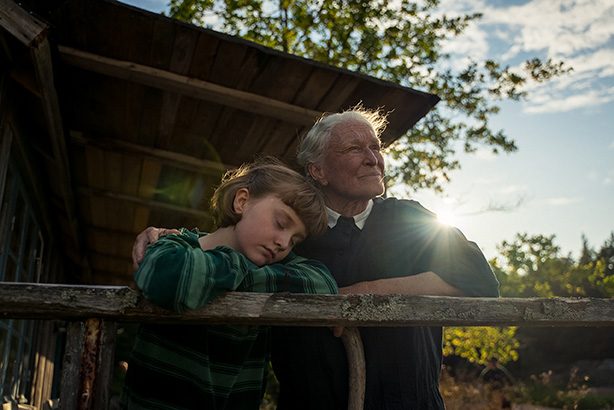
The Summer Book (McDowell, 2024)
Film paradoxically shows little interest in old characters while venerating aging actors. Think about On Golden Pond and you are more likely to remember Katherine Hepburn and Henry Fonda than the names of the characters they play. A film need not be an actor’s swan song, but once he or she reaches a certain age, the character being played feels almost incidental to the joy of seeing the performer on screen. Charlton Heston in Hamlet, Peter O’Toole in Troy, or James Cagney in Ragtime are all distractions to some extent from the movies they are in, and yet we do no much care or blame them.
I think that largesse is at least in part fed by the way photography gives the illusion of freezing time. Glenn Close is old in The Summer Book, but one need only pop up in the DVD for Garp, or The Big Chill right after it and she will be young again. In our minds and memories, she exists, as most actors do, simultneously at all ages and all points of her career.
If that seems a longer intro than necessary to a review of her latest movie, perhaps that is because contemplating her career, even just remembering it, is much more interesting and rewarding than contemplating the life of Grandmother (or anyone else) in The Summer Book.
Based on a 1972 novel by Finnish author Tove Jannson, the film is itself about a moment seemingly frozen in time. There is little plot to speak of, and the characters often lapse into silence. Close’s character is hardly one of cinema’s saintly aged ones. She is patient with her granddaughter, though that patience has limits. Sophie, the child, has lost her mother, and the film manages to convey the numbing pain of grief well enough. Sometimes it doesn’t hit the living in angry waves inciting Oscar-bait speeches; sometimes, it just sits like a weight around on one’s heart.
Because the novel is structured around twenty-two vignettes rather than one unified plot, the works it most reminded me of were Laura Ingalls Wilder’s Little House on the Prairie series. It is probably not a coincidence that Little House worked better as a television series than a film. In that format, the individual incidents, even if they are just excuses for philosophical discussions, could be stretched and shaped into episodes. Television also delivers its episodes over time — or at least it used to — allowing our investment in the characters to grow incrementally. Film doesn’t have the luxury of letting relationships remain static for long stretches without the characters themselves coming across as static.
None of this makes The Summer Book a bad movie. I think it is being overpraised, and I am speculating as to why critics might be doing so. Close’s popularity is the easiest answer. It is also possible that others see something in the material that I don’t.

