
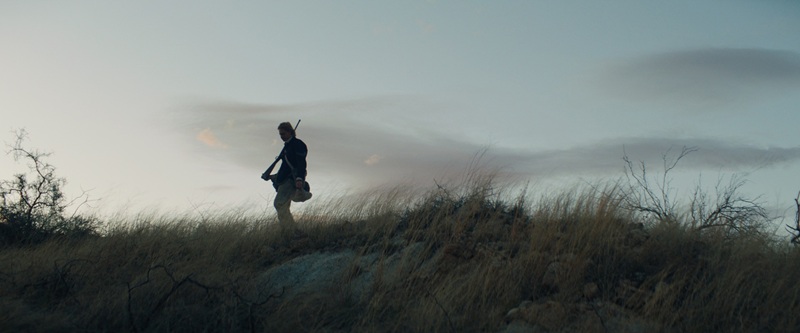
The War Between (Correa, 2025)
The War Between works slightly better as an illustrated history lesson than as a feature film. Westerns have been a staple of American film since its inception, partially because of Hollywood’s proximity to locations for shooting that have not been modernized. Picacho Peak, the western-most battle site of the American Civil War is one such location, and had I seen the film at a battle-site museum explaining what happened there, I would have been content with it.
But writer Ron Yungul and director Deborah Correa have a civics lesson rather than a history lesson in mind. The latter says in her Director’s Statement: “And now, standing at our own crossroads, we must decide how we shape what comes next [. . . .] Can we recognize ourselves in those we’ve been taught to hate?” It is impossible to denigrate the benign intentions implied by such a statement, but there is a fine line between refusing to be one-sided in the portrayal of political or moral conflict and embracing an amoral both-sidesism.
In The War Between the Union Abolitionist soldier, Israel, is apparently blind to his own racism towards Native Americans. The Confederate, Moses, learns the Apache language and shows respect for their culture and tradition while remaining seeming oblivious to any contradiction between those attitudes and the Southern tradition of enslaving Africans that he fights to preserve. Such contradictions are part of the human condition, existing in all ages. Consequently, I can’t fault the film for picking as its subject two representatives of this truth from an age past.
Given the narrow focus demanded by an indie budget, though, the film could be construed as saying that because representatives of both sides are flawed, the sides themselves are morally equivalent. That’s a harder stance to justify, The characters are not placed within a broader context except through their writing, which is often richer and more nuanced than the dialogue.
Correa says that the film “challenges audiences to confront their own blind spots.” This statement felt like wishful thinking, an articulation of the impact the director hoped the film would have rather than a description of how the film was designed. To the extent that accurately articulates the director’s antistatic goal, the film, at least for me, failed. At no time did I look at the racism of the Union soldier and think that it justified or was justified by the deeper racism supporting slavery. At no time did I contemplate the confederate soldier’s use of the Apache language and wonder whether those who support racially unjust policies and structures today might have something to teach me about multiculturalism. If that sounds cynical, I concede it is, though in truth it is more cynical about the current political moment that Correa claims to be addressing than it is about the film itself.
From a filmcraft perspective, The War Between is fine. The tight framing and voice-over readings of letters came across as rote, though competent. The cinematography was above-average. I just wanted less pearl-clutching and more story.

