
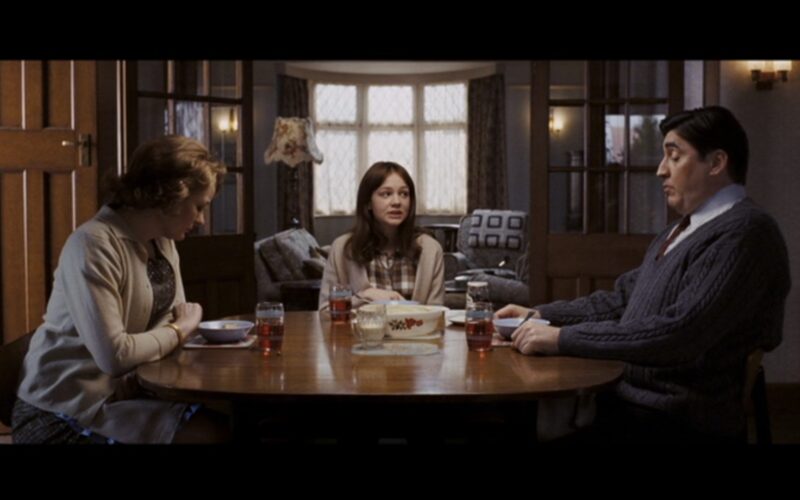
An Education (Scherfig, 2009)
The Arts & Faith web site has announced that the theme for the 2026 Top 25 “Spiritually Significant” films list will be Women-Directed films. Deliberations are currently underway for over 100 nominated film, and the winners will be announced in May. Canon formation is an important part of criticism, and I am pleased to be contributing to a list that may take a small step toward gaining more recognition for the work of women directors. All such projects provide an opportunity to discover new (to me) films that demand attention and to revisit and champion films which I did esteem but have not necessarily received the recognition at Arts & Faith that I think they deserve.
I will be using the next two to three months to consider (and in some cases lobby) for nominees. If you follow the link above and see a film on the list of nominees that you think warrants special attention, drop me a comment and I will prioritize watching it. Although there is no enforced definition of what makes a film “spiritually significant,” I have interpreted the term to mean a film that was overtly about moral, religious, or spiritual themes (or people) or one that prompted spiritual contemplation in the viewer.
While the Arts & Faith Top 100 Spiritually Significant films list is typically revised every five years or so, the group has curated Top 25 lists in the intervening years. To this point, those lists have been mostly genre-focused (comedies, horror, musicals, documentaries), though they have occasionally been defined by a theme (mercy, “waking up,” growing older). This is the first list to be defined around the identity of the creator(s), and Lindsey Dunn does an excellent job in the press release linked above explaining why such a focus is timely. That shift does raise new questions as I contemplate some of these films. Should a film’s inclusion pay special attention to the contributions of the director(s)? It isn’t always easy, as I have written before, to distinguish the contributions of writer, actor, cinematographer, and director. Should it be — must it be — a film about women? Or must the direction give a noticeable emphasis to a female perspective on the narrative? I don’t know if there is a right answer to these questions, but I think the project is a worthy one for asking voters to consider them.
Lone Scherfig’s An Education was ranked #2 on my list of favorite films in 2009 (behind only Jessica Hausner’s Lourdes, which was also nominated for the 2026) list. While not being Carey Mulligan’s first role (she played Kitty Bennett in Pride and Prejudice in 2005), it was a breakout performance. The story is adapted by Nick Hornby from a chapter in Lynn Barber’s memoir. Academy Award nominations were earned by Mulligan and Hornby, and the film itself was nominated for Best Picture. They lost to Sandra Bullock (The Blind Side), Geoffrey Fletcher (Precious), and The Hurt Locker, respectively.
The Direction
Direction need not always be inventive or experimental to be effective. It is important to remember, too, that directors may interact with cast and crew in different ways. The popular myth of the auteur who oversees all elements of production isn’t always the reality on a commercial film set, where casting choices may be controlled to some degree by a studio and editing and cinematography may or may not be collaborative.
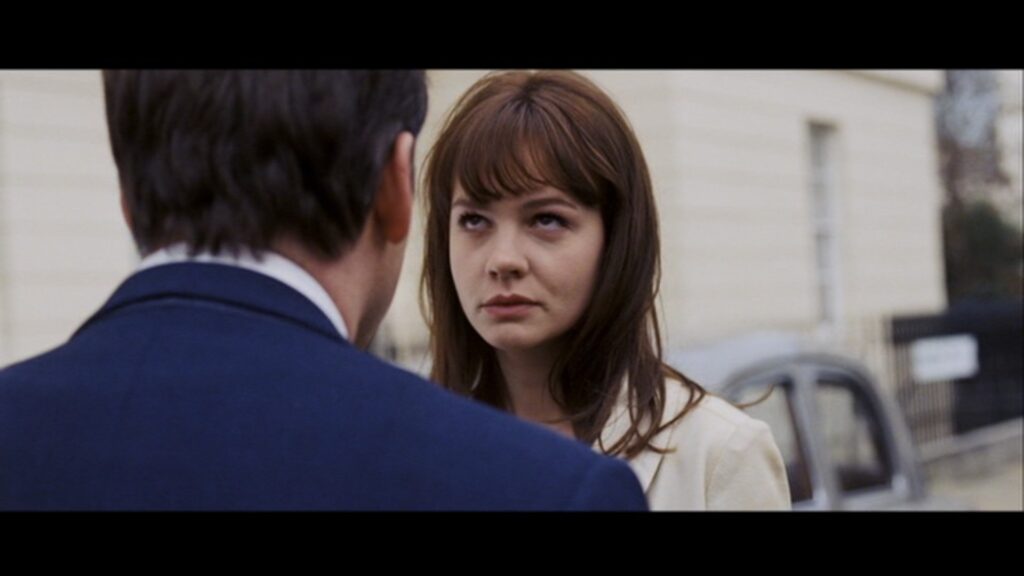
The feature of the directing that stood out to me on this viewing was the blocking of shots to suggest perspective. Yes, this is meat and potatoes film language, but it is important to remember that An Education is a memoir, meaning that the subject (in this case, Lynn Barber) is looking back on her life (or a part of it) and reflecting on it. Jenny is in nearly every scene, and while she is the unwavering object of scrutiny, Scherfig often varies camera placement to reinforce who is studying her.
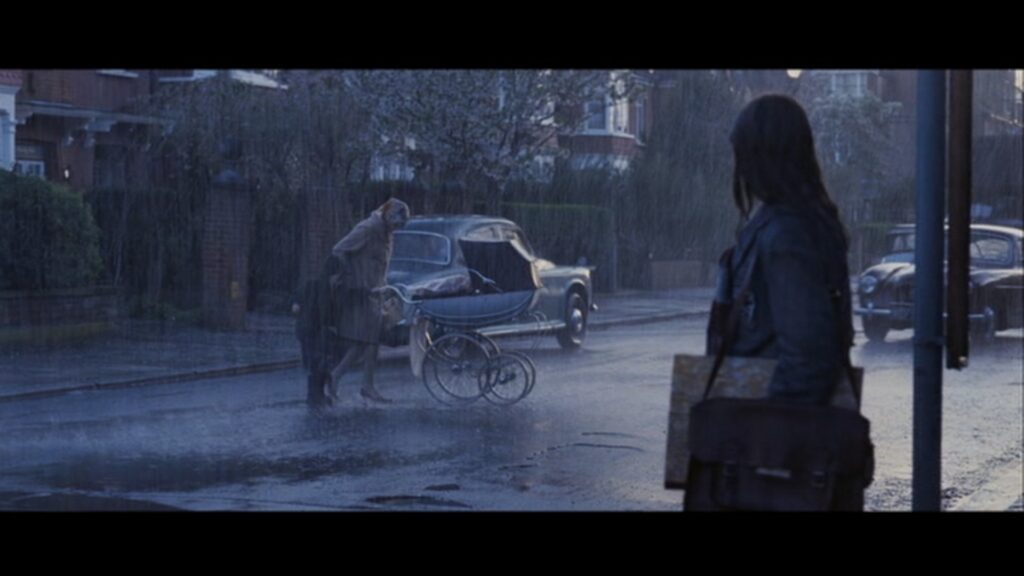
Take, for example, Jenny’s first meeting with David. Immediately before David approaches Jenny in his car, we get a shot of Jenny watching a mother struggle to cross the rain-drenched street with two children. Rather than showing us a simple shot/reverse shot to emphasize that the mother is simply what Jenny is seeing, we get a shot that includes both of them, includes Jenny looking. This subtly but effectively reminds us that Jenny is both participant and viewer for this scene. It is a product of her memory, and visually suggests a consciousness outside the time of the film. It is not until the very last scene that Hornby’s script gives the adult, retrospective Jenny a voice, providing a voice-over coda about the experience. But we do occasionally see Jenny looking and not just being looked at.
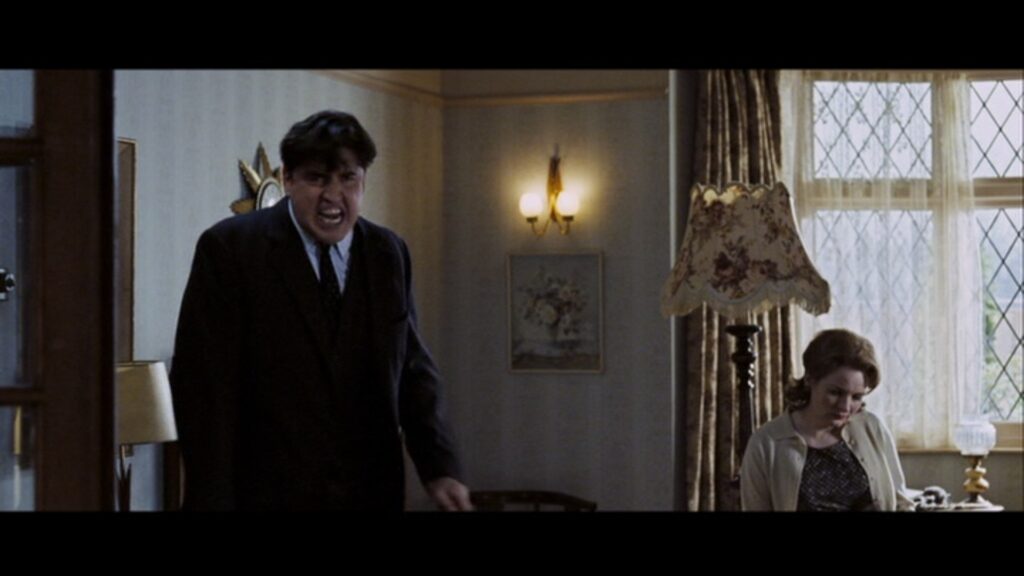
An important part of Jenny’s education is what she learns at home, and there are a number of scenes that begin or end with Jenny as a viewer. After a first bungled school assignment, she sits in an adjacent room while her father (Alfred Molina) and mother (Cara Seymour) argue about the cost of her schooling. While dad does address her occasionally, it is from a distance. the frame of the door even connotes the idea that she is watching characters in a play or movie, at times interacting with them but mostly remembering them rather than her interaction with them.
In another scene, Jenny eavesdrops on the stairs as David woos his parents. When she enters the scene, she picks up on his performative lies (about being an Oxford graduate), and the scene becomes a memory of a performance.
The Female Perspective
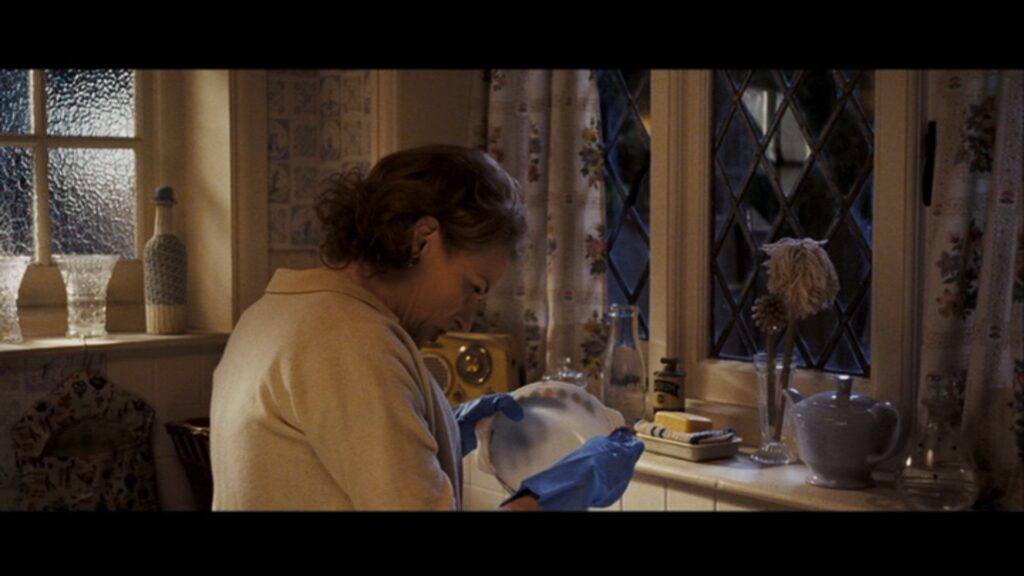
The film is not just about a girl’s experiences; it is also about a woman’s perspective about the female experience. Jenny is repeatedly told by her father and teachers that her choices for life are limited by the fact of her gender. While the twenty-first century viewer may be more likely than anyone in Jenny’s world to ask whether it is class status or gender that most restricts her, her world is nevertheless one framed as a choice between scholastic success as a path to a slightly more secure place at the bottom of the middle-class ladder and the “fun” that only David and his money can provide. In the picture mentioned earlier, the mother is helpless before the elements, forced to think of her children first. When Jenny returns home from her first date with David, a concert and dinner that she calls “the best night of my life,” she finds her mom alone, scrubbing a dish.
Olivia Williams, a beautiful woman in her own right, is given nerd-glasses, a mousy disposition, and a limited wardrobe to further emphasize the gulf between women who earn their own money and women like Helen (Rosamond Pike) on whom money is spent.
It is telling that for all the differences between David and Jenny’s father, they both echo the same class-determined rationalization for their choices. Dad complains that money “does not grow on trees,” insisting that the only way Jenny (or any woman) can not be a burden is by working hard enough to be able to earn the largesse of someone else (a suitor or scholarship). No woman has the power to earn enough to provide the lifestyle that Jenny wants (few men do, either); in fact, the only women who have the power to earn anything at all are those who earned a scholarship. David, too, claims that money does not grow on trees, though he offers this as an excuse for stealing. While this agreement leads to different life choices, both of the males impress on the impressionable Jenny that the life she wants is simply not available to a woman, because a woman has no means of generating the kind of income needed to rise above subsistence living. It turns out (in the postscript) that the adult Jenny (or at least the adult Lynn Barber) may have come to deny this assertion, but it isn’t really possible to understand this chapter of Jenny’s life without acknowledging the constant messaging of her time and place that a woman is worth inherently less than a man and so must choose between allowing a man to do for her or simply living without.
Spiritual Significance
When I heard Nick Hornby speak to the audience at the Toronto International Film Festival, I was not at all surprised that he chose to adapt Barber’s memoir rather than one of his own novels. By 2009, High Fidelity, Fever Pitch, and About a Boy had all been adapted for the screen. Since Fever Pitch is autobiographical and High Fidelity is proximate to both Fever Pitch and An Education, it is not surprising that the films share some core concerns.
I have suggested elsewhere that High Fidelity and Fever Pitch are both about failed attempts by postmodernists to find meaning in a universe they have been told is existentially meaningless. I sometimes suggest to students that a difference between modernism and postmodernism is that while both are disillusioned and reject traditional avenues of investing life with meaning (particularly religion), some modernists held out hope that meaning might yet be found in a substitute, particularly art or culture. The bitter disillusionment of postmoderns often stems from the inability of the things they have placed at the center of their hearts and souls to fill the void created by the things they have evicted from those places.
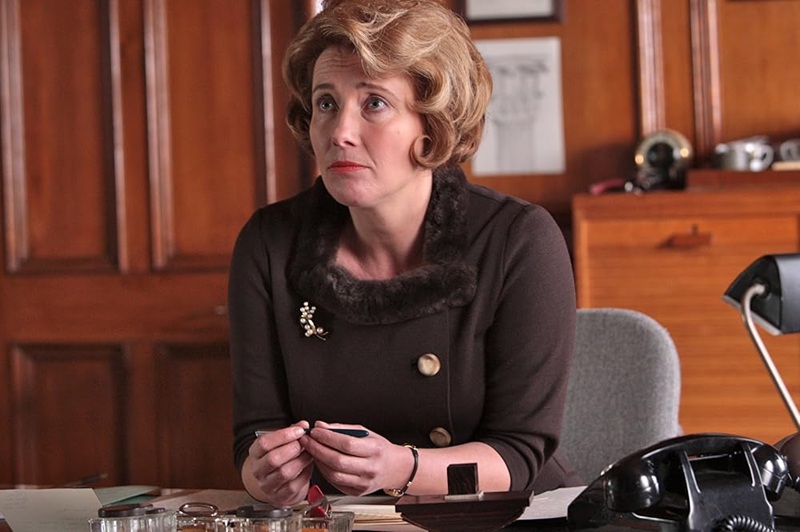
Jenny is able to convince herself for a season that the “fun,” as David describes it is sufficient for a happy life. It is not hard then for her to win, or to appear to win, the film’s central argument, which takes place not between her and David or her and her father but between her and the headmistress (Emma Thompson):
“Studying is hard and boring. Teaching is hard and boring. So, what you’re telling me is to be bored, and then bored, and finally bored again, but this time for the rest of my life? This whole stupid country is bored! There’s no life in it, or color, or fun! It’s probably just as well the Russians are going to drop a nuclear bomb on us any day now. So my choice is to do something hard and boring, or to marry my… Jew, and go to Paris and Rome and listen to jazz, and read, and eat good food in nice restaurants, and have fun! It’s not enough to educate us anymore Ms. Walters. You’ve got to tell us why you’re doing it.”
The reference to the nuclear bomb here might suggest that the existential quandary has been discovered by postmodernists, but it really hasn’t. The question of what makes life worth living has been a central question for as long as humans have been conscious. And Jenny’s logic is impeachable and impregnable here. If there is no God, let us eat (good food in nice restaurants), drink (Paris wine), and be merry (listen to Jazz and marry whomever can give us those things), for tomorrow we die.
The Verdict
I think An Education is a great film, and I am an enthusiastic proponent for it taking a place on the Arts & Faith list. If there is a weakness to its candidacy, it may be that Jenny’s transformation is a bit too quick. Because of that quickness, it may even feel as though it is a surrender to the inevitability of class realities rather a refutation of the means through which she is trying to achieve her goals. At the end, Jenny tells Miss Stubbs that there is “no shortcut” to the life she wants. But what she now means by the life she wants is not as clear as it might be. Her postscript suggests that she went to Paris with other boys and acted like it was the first time. Is this, then, a repudiation of the life she lived with David or only of the means they each used to pursue it? It is important to me in valuing the film that Jenny learn something from her education and not simply be brought low by it. I think she has, but what that something might be is easier to see if you read the rest of Barber’s memoir than if you simply watch the film, as good as it is.
********************************************************************
This post originally contained a link to a review at Christianity Today Movies.

